
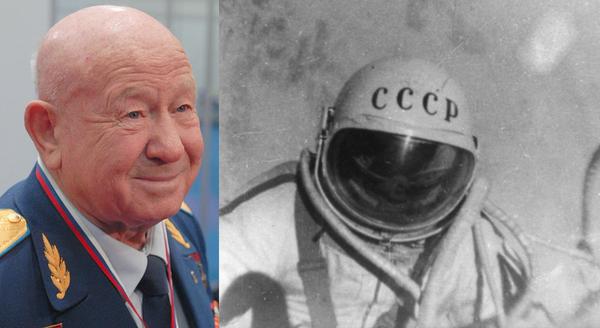
50 years ago today Alexei was the first of us to step into the void. A brave, fun, artistic, visionary man. Role model.
50 years ago today Alexei was the first of us to step into the void. A brave, fun, artistic, visionary man. Role model.
Johnson & Johnson subsidiary McNeil Consumer Healthcare ‒ which makes Infants’ and Children’s Tylenol and Children’s Motrin ‒ agreed to pay $25 million to resolve the case, the Associated Press reported, citing court documents. The deal came at a plea hearing Tuesday afternoon.
http://rt.com/usa/239465-tainted-childrens-tylenol-guilty-plea/
I’m watching the Israeli election results with bated breath. So far, exit polls show the election extremely close, with a slight edge towards Netanyahu’s attempt to form a new coalition government — but it’s close. This campaign has been marked by a new kind of polarization, one fostered rather actively by Avigdor Lieberman and his Israel Beiteinu party, and has spread among more of the right wing — overt and rather bloodthirsty racism appears to now be the name of the game.
The diagram below is the best summary I’ve seen of the exit polling. Even if you follow Israeli politics, it may be very hard to figure out who the players in it are, because the parties seem to change from one election to the next, so for those who are interested, here’s a short summary. (NB: The parties here are ordered not based on a single, linear political spectrum — there are two major axes in Israel, left-right and secular-religious — but based on their likelihood to ever form a coalition with one another.)
Starting from the left:
The three Arab parties decided to merge and run together as the Joint List, and they seem pretty likely to end up at 13 seats. These represent the Israeli Arab population.
Meretz (“Vigor”) is a left-wing secular party, advocating a two-state solution, social justice, human rights, and environmentalism.
The biggest center-left party, Labor, and the second-biggest, Hatnuah, (“The Movement”) joined up to run together as the Zionist Union. This would be the center of any left-wing coalition. Labor supports having a peace process, and Hatnuah is also particularly interested in integrating the Arab and Haredi (ultra-orthodox) communities more deeply into society. On those rare occasions that economics really matter in an election, Labor is Socialist; but in Israel, the gamut of economic positions is relatively narrow, from “we should have a free market with a few aspects of socialism” to “we should have a free market with a few more aspects of socialism.”
Yesh Atid (“There is a future”) is a secular party that popped almost out of nowhere a few years ago. Their main interest is in checking the influence of the ultra-orthodox, and ending their various special exemptions and religious privileges. They generally align with the left bloc on other issues.
Kulanu (“All of us”) is a center-right secular party. (It and Hatnuah formed out of the fission of the Kadima (“Forward!”) party a few years ago, which in turn formed out of the fusion of various left- and right-wing elements after both of the major center-left and -right parties collapsed in flames) They’re focused on economic issues, especially keeping the cost of living under control and breaking up monopolies; on strategic issues, they’re fairly security-oriented but also believe in a two-state solution.
UTJ is where things start to get weird. They’re an ultra-orthodox party that I’ve posted about before, in the context of their campaign during the last election against geometry. (https://plus.google.com/+YonatanZunger/posts/QinuQ5yTzgP) They are also, in general, against any sort of system of public education apart from religious education, and think that we shouldn’t have all of these public works and instead invest more in religious education. They have no opinion on matters of peace and security at all; these things involve secular people and non-Jews, so they really don’t care. If you think of them as an isolationist and non-violent version of the Taliban, you’ll basically get the idea.
Shas is another religious party, which likewise doesn’t care much about peace and such issues. They have only two issues they really care about — religion and corruption — and they’re strongly in favor of both. Their votes are basically for sale to whichever coalition will pay them off appropriately, and as a result they end up in nearly every coalition. Unfortunately, part of their price includes continuing control over the Interior Ministry, which means things like marriage law being determined by their rabbis. They represent a somewhat mystically-oriented branch of Judaism which is very popular among parts of the Sephardic working class, and so their campaigns tend to involve people taking oaths and receiving talismans and so on. Israeli politics is surreal.
Likud (“The Consolidation”) is the big secular center-right party, and the party of the current PM, Netanyahu. Historically, the party has been on the “security” side of the peace/security tension, and is a bit more free-market oriented than Labor, in those few elections where economic issues matter. (But there’s no radical difference here; their economic policies are pretty similar to those of Kulanu or Yesh Atid) However, thanks to their very close relationship with Israel Beiteinu and similar groups, they’ve recently gone in, shall we say, a more interesting direction, with Netanyahu making a statement earlier today about keeping all those Arabs from voting too much and making sure the state stays Jewish.
Netanyahu is known as being profoundly opportunist, and willing to do anything and hold any platform he needs in order to get power. Racism sells to voters he’s unsure about, so: more racism. He has also been explaining, in the past few weeks, how an international Zionist conspiracy is trying to unseat him. (No, really. cf: https://plus.google.com/+AndreasSchou/posts/auDniwSz6Ui)
(Incidentally, this is tied to the parties you don’t see on this chart, Yahad (“Together”) and Otzma Yehudit (“Jewish Strength”). The OY party is described as “neo-Kahanist,” with Meir Kahane being the assassinated former leader of the Kach party, a party which was basically kicked out of the country for being a terrorist organization. The Kach platform can be summarized as “genocide.” They are not nice people. These guys are the equivalent of European political parties that don’t try to hide their Nazi affiliations much at all. They’re not on this chart because, thank all the gods, they didn’t get enough votes to pass the 3.25% threshold to get any seats. But these are the “stray votes to pick up” that many parties on the farther right are interested in)
And now we get to Israel Beiteinu. (“Israel is our homeland”) If you’re familiar with European far-right secular political parties, you can basically guess what these guys are like; think of an Israeli version of UKIP, at best. However, in the run-up to the election they’ve decided to dispense with the subtlety, calling for “disloyal” Arab citizens to be beheaded. (https://plus.google.com/+AndreasSchou/posts/VkZp2D1ShLM) The exact definition of “disloyal” was left as an exercise for the listener. This party’s voting base is basically entirely working-class Russian immigrants who feel generally disenfranchised and disconnected from broader society, and who are quite familiar with what we politely call “nationalist” political parties.
Finally, we have Habayit Hayehudi. (“Jewish Home”) They are a right-wing, religious party which believes that Jews are divinely commanded to maintain control over the entire land of Israel. Settlement-building is a divine commandment for them, and that’s what many of them go off and do, legally or otherwise.
So you can see why some of these parties might not want to make a coalition with one another.
Another way to read this graph: The Joint List, Meretz, and the Zionist Union are all fairly together on subjects of peace and human rights, which is ultimately their primary issue. Likewise, Likud, Israel Beiteinu, and Jewish Home are all fairly together on subjects of security and Jewish supremacy, which are their primary issues. Yesh Atid, UTJ, and Shas are all primarily about the religious/secular divide; YA lines up enough with the left-wing coalition on other things that they’ll join that, which means that UTJ and Shas will join the right wing.
Basically, what a lot of it is boiling down to is this. The Zionist Union will try to form a center-left bloc, which will be committed to a two-state solution, to broader integration of the Arab population, and to human rights. They’re going to need Yesh Atid, which means they’re going to also be anti-clerical. Simultaneously, Likud is going to try to form a center-right bloc, with a kind of nationalism / racism as party platform, and Netanyahu stated firmly and publicly yesterday that there will be no two-state solution or real negotiations so long as he is in power. Shas and UTJ will join this coalition, if nothing else because Yesh Atid will join the other one.
And that leaves Kulanu in the middle, and its party head, Moshe Kahlon, as kingmaker. The party’s policies could get along with either coalition; while historically, Kulanu is basically a break-off of Likud, Likud has also shifted since then, so Kulanu’s allegiance isn’t a slam-dunk. The two large party leaders — Netanyahu (aka Bibi) for Likud, Herzog (aka Bugi) for Labor — will be up very late tonight negotiating and offering deals.
Oddsmakers are giving a slight edge to the right wing as of now, but it’s still fairly far up in the air. But the difference between the two putative coalitions is stark and has gotten starker in the past few days: the left bloc being committed to a peace process, a two-state solution, and integration of Arab, Orthodox, and secular Jewish citizens into a single polity, and the right bloc being committed to increased settlements, no giving up of land, and to rather thoroughly disenfranchising Arabs in particular.
Those of you who occasionally talk about wanting multi-party government in the US: watching this sort of thing in action, and just how much power fairly small parties end up with, is exactly why I think that would be a terrible idea.
And now, having offended nearly everybody who has read this far, I’ll go back to watching the news.
There we go, GNU TerryPratchett in the overhead with no overhead.
Ocean Kitchen, An Aquarium With a Kitchen Countertop on Top
On Sexism in the Tech Industry, and Why We’re Blind to It
If you are male, in the tech industry, and are baffled by the fact that you don’t see the extremely inappropriate behavior that your female colleagues are complaining about, consider that if you are in a Google engineering org, there are eight to twelve times as many men as women. To get a baseline approximation of ambient workplace hostility, take a few counterfactuals:
(A) That workplace social graphs are randomly distributed, with no nonrandom siloing by gender;
(B) That all inappropriate work behavior is initiated by men and directed at women, and;
(C) That any given woman is as likely as any other to be targeted, and;
(D) That all harassment happens in a setting where exactly one randomly selected person is well-positioned to observe.
Think back to the most inappropriate thing you’ve seen this year. Under these assumptions, that happens to each woman engineer at Google, every month. The most inappropriate thing you’ve seen in the past twelve years (for many of you, “your entire career”) happens to each woman engineer at Google every year.
There are lots of ways in which this could be off: unusual concentrations of women in particular organizations; same-gender sexual harassment; preferential targeting; lack or excess of witnesses. Any or all of these might be true. But there is no reason to expect that a completely naive baseline (viz., “occurrence of sexual harassment at precisely the level I observe”) is anything close to true.
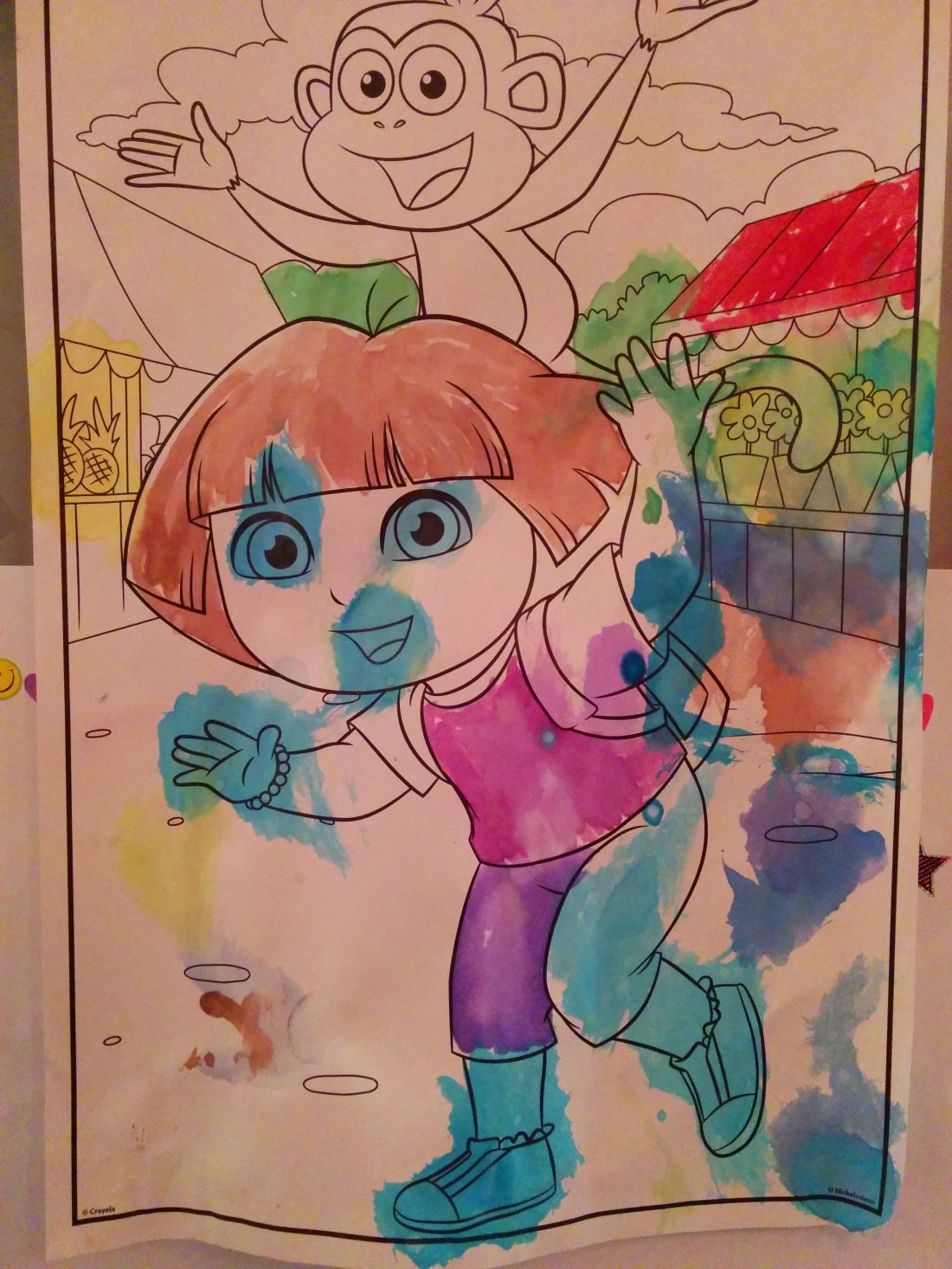
For some reason, in my house Dora is a fairly terrifying creature.
Until this moment, I felt kind of badass about the fact that Dwarf Fortress is the game I play. Then I read this interview and realized that writing Dwarf Fortress is the game that Tarn Adams is playing.
“Yeah, we had a list, it started almost a decade ago (laughs), it was of 100 things that would make version one of the game. We count up one centi-version number for each one that we finish and we’ll get to 1.00 and that’ll be it.
That lasted for a while… (laughs) we got maybe to 31 that way.. then it changed a bit. Some really cost more than others.
So we broke it up into a system now, I think it’s got about 2700 points and I’ve just got this giant file. Every couple of years I write a new program, or have a new giant piece of paper on a desk, or a flashcard system; partly just to keep it fresh, I guess. We check things off, that reports some points back and increases the version number – it’s all systematised – and there’s not a lot of wiggle room left in that system but we’re pretty satisfied with what’s there. The main thing is to say what’s in and what’s out and how far something needs to go before it’s considered version one-ish.”
This episode of Song Exploder is just about perfectly put together. John Roderick is an incredibly charismatic interview subject, and the pathos of the story of the song’s creation really comes through. Give it a listen.
This is amazingly familiar.
 A Pun Involving Travel